Weak-Beat Geocentrism and Strong-Beat Heliocentrism
People once believed that the Earth stood at the center of the universe. It took humanity hundreds of years to understand that the ground beneath their feet was itself moving. The same thing is happening in musical rhythm. In rhythm too, “the weak beat does not move; the strong beat is what moves.” But people standing on the strong beat cannot perceive that, and instead they struggle to make sense of the weak beat’s mysterious motion. Weak-Beat Geocentrism is a simple way of describing that mystery.
How Japan and the Rest of the World Apply Timing Nuance Differently
When you compare Japanese music with music from abroad, there is a major difference in how timing nuance is applied. The difference lies in which note is treated as the reference when strong and weak beats are present.
When Japanese people try to add nuance to a note by shifting its timing, they unconsciously place the reference on the strong beat, fix the strong-beat position, measure the weak-beat position from that strong-beat position, and then move the weak beat. That may feel perfectly natural from a Japanese point of view, but once you look outward to the rest of the world, it is actually very different.
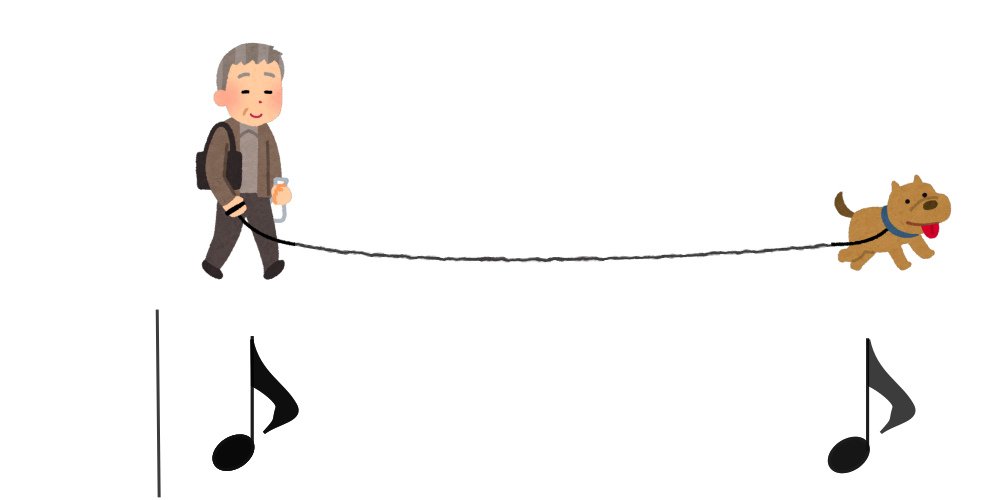
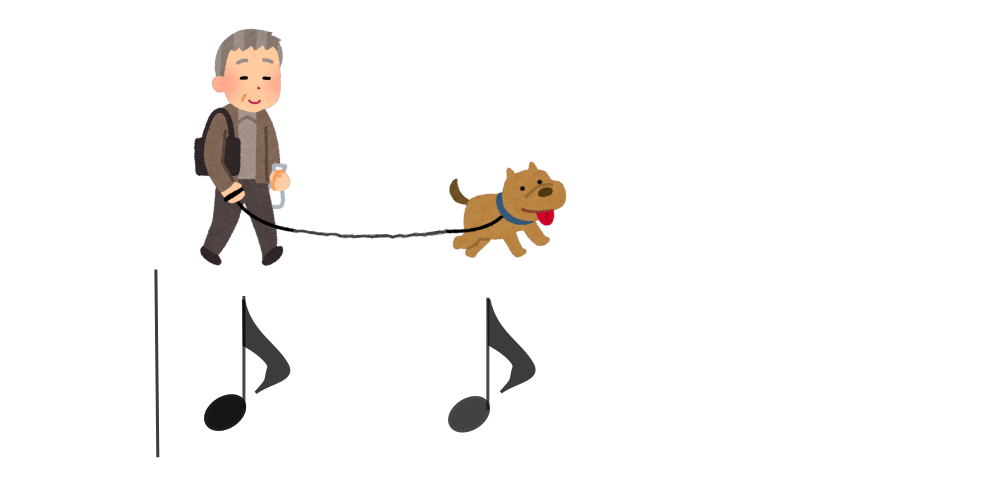
People outside Japan treat this very differently.
When people outside Japan try to add nuance to a note by shifting its timing, they unconsciously place the reference on the weak beat, fix the weak-beat position, measure the strong-beat position from that weak-beat position, and then move the strong beat.
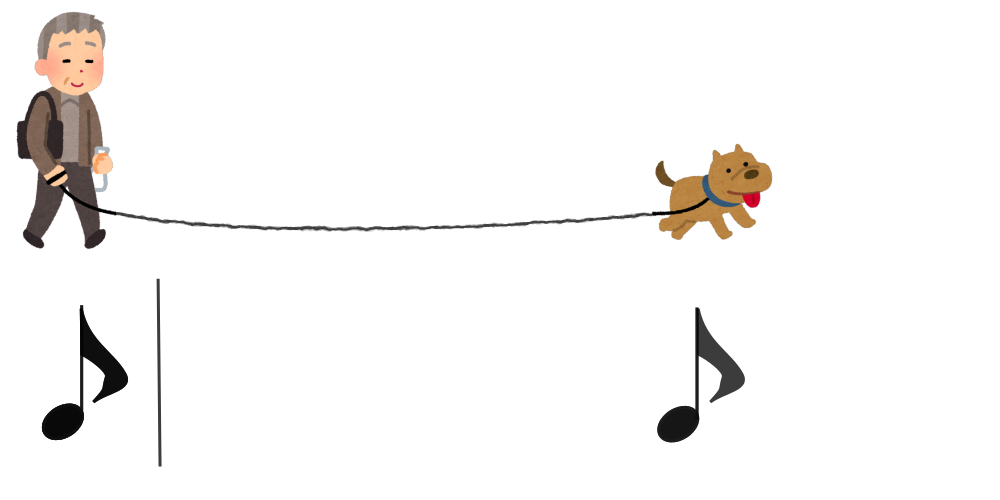
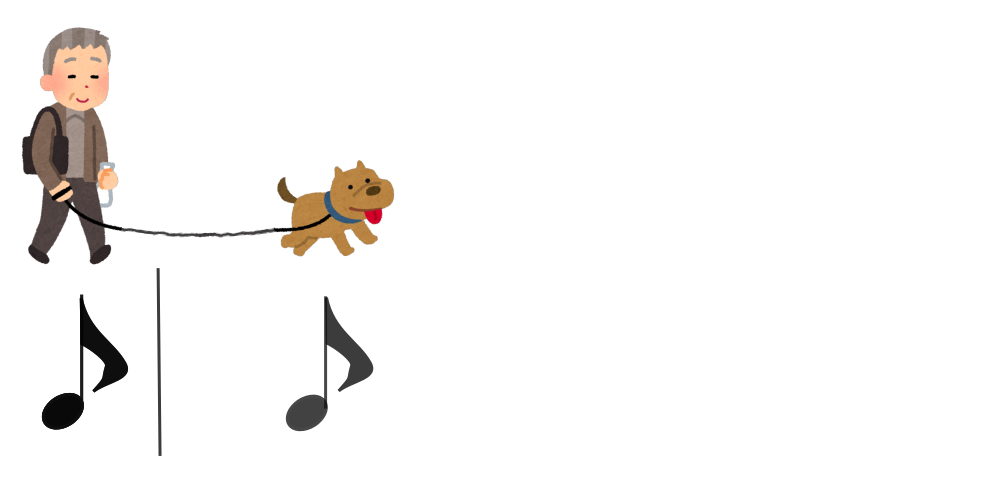
Strong-Beat Reference
Placing the reference on the strong beat, fixing the strong-beat position, measuring the weak-beat position from the strong-beat position, and then trying to move the weak beat is called Strong-Beat Reference.
Weak-Beat Reference
Placing the reference on the weak beat, fixing the weak-beat position, measuring the strong-beat position from the weak-beat position, and then trying to move the strong beat is called Weak-Beat Reference.
Characteristics of Weak-Beat Reference
People with weak-strong rhythm recognition (= native speakers of stress-timed rhythm languages) have a habit, when shaping rhythmic nuance, of fixing the weak-beat position as the reference position and creating nuance by moving the strong-beat position. This expressive method appears in almost any jazz, funk, or R&B, but the following video makes it especially easy to observe.
レイドバックの基本『オフビートの位置は固定。オンビートの位置が遅れる』 ギターの方がこの演奏中でそれをはっきり行っています。
— 岡敦/Ats🇯🇵 (@ats4u) April 23, 2023
これを日本人が聴くとオンビートの位置が固定でオフビートの位置が早くなったように錯覚するため、同じ様に演奏することが出来ません。 #オフビートで思考する語学 pic.twitter.com/QC9uaA2F4h
Characteristics of Strong-Beat Reference
By contrast, people with strong-weak rhythm recognition (= native speakers of mora-timed rhythm languages) have the exact opposite habit when shaping rhythmic nuance: they fix the strong-beat position as the reference position and create nuance by moving the weak-beat position.
ずれのない歯ざわりのよい頭拍。朗々と歌うレイドバック。渋みと哀愁 ─── 演歌の素晴らしさがつまっている。
— 岡敦/Ats🇯🇵 (@ats4u) October 8, 2023
氷川きよしのずんどこ節https://t.co/xKDWfdwEC3 pic.twitter.com/nN06TRy28c
In Japanese enka, moreover, the accompaniment usually takes the role of fixing the strong-beat position as the reference position, while the singer creates nuance by moving both the strong and weak beats of their own performance against that fixed strong beat. This differs sharply from weak-strong rhythm recognition, where the weak-beat position is always fixed.
Weak-Beat Geocentrism and Strong-Beat Heliocentrism
At this point, a phenomenon arises in which people with strong-weak rhythm recognition cannot accurately perceive the rhythm recognition of people with weak-strong rhythm recognition.
The way people with strong-weak rhythm recognition fail to understand the nuance of weak-strong rhythm recognition resembles the difficulty of understanding celestial motion through a geocentric model.
『ジャズのリズムはオフビートが基準点!』
— 岡敦/Ats🇯🇵 (@ats4u) May 1, 2022
オフビート基準点 ⇔ オンビート基準点
オンビートを基準にして考えると、基準点自体が動いてしまうことから、音符ずれの動きが全て矛盾して見えてしまう。オフビートを基準点にして考えると、とても単純に解釈できる。 pic.twitter.com/muwn40MxLD
Once you notice that the weak-beat position is the reference, everything looks like a simple operation. But if you think the strong-beat position is the reference, everything suddenly appears to be a complicated motion.
What was actually moving was the strong beat under your own feet. Realizing that feels much like the moment when people who thought the sun was moving realized that it was actually the Earth beneath them that was in motion.
Strong-Beat Reference and Weak-Beat Reference in Swing
The distinction between strong-beat reference and weak-beat reference takes on major significance when trying to perform swing.
Swing Performed with Weak-Beat Reference
ストレス拍リズム(英語)のスイング ─── ベースが1/9早めのタイミングに移動しライドシンバルの8分弱拍が4分音符に対して5/9の位置に配置されている。また4分音符は全て1/9遅れている。 #オフビートで思考する語学 (訂正版) pic.twitter.com/QajecpWuqP
— 岡敦/Ats🇯🇵 (@ats4u) June 11, 2025
Swing Performed with Strong-Beat Reference
モーラ拍リズム(日本語)のスイング ─── 俗に「頭重心」「縦乗り」という。ライドシンバルの4分音符が基準位置になっているため移動しない。ベースが1/32 遅めのタイミングに移動し遅れる等々、全ての打点が4分音符よりも後ろに遅れて配置され音量が小さい。 #オフビートで思考する語学 pic.twitter.com/KMnIJYQXmC
— 岡敦/Ats🇯🇵 (@ats4u) June 9, 2025
Rhythm and Kotodama
Swing performed with strong-beat reference is extremely painful for people who experience swing as part of their native-language culture. For Japanese people, who often do not distinguish weak-beat reference from strong-beat reference, it may seem like only a tiny difference. It is understandable to want to say, “Don’t make such a fuss over something that small.” But for people outside Japan, rhythm is tied to language, so even a minute rhythmic difference is perceived as an enormous sensory difference.
Rhythm corresponds to Japan’s Word Spirit. As we have seen, music is language. Just as word spirit has long been called a Word-Spirit Sword, something that can bring people to life or kill them depending on how it is used, rhythm too is language for people outside Japan. If this weapon, which is also language, is handled like a child’s toy, it can wound people by mistake.
As students of another culture, we should remain humble before differences in feeling like this.
Jazz is often described as playing with rhythm. As jazz performers, we should recognize clearly that rhythm is something dangerous, like a Sword, and that we are playing with something dangerous enough to kill, and perform with that level of resolve.
Appendix: Video Collection of 2⁻ⁿ Groove
欧米/東南アジアの交互に手を叩く「交互ルール」リズムに対して、真逆のルール「同時ルール」で歌う演歌。演歌のリズムの起源は中国にある。日本の演歌は(実は)中国で高い人気がある。
— 岡敦/Ats🇯🇵 (@ats4u) June 15, 2023
Credit : 蒋大为 - 北国之春 https://t.co/TtRu1Sfo52#オフビートで思考する語学 pic.twitter.com/DsjR7NPhL4
二葉百合子の『関東一本〆』
— 岡敦/Ats🇯🇵 (@ats4u) June 15, 2023
正統派演歌の語法
・ぴったりに合わせる強拍
・後ろにつく弱拍
・揺れる強拍
Credit : 二葉百合子 - 関東一本〆https://t.co/Pz122I6Hhv#オフビートで思考する語学 pic.twitter.com/3M68PZ4gbP
Table of contents
- Offbeat Count Theory
- Introduction
- What Are the The Nine Principles of Groove?
- Why Are Japanese People Tatenori
- Which Comes First, the Strong Beat or the Weak Beat
- Phonorhythmatology
- A Letter to Mora-Timed Language Speakers
- Split Beat (Schizorhythmos) and Isolated Beat (Solirhythmos)
- What Is Metre
- Multi-Layered Weak-Beat-Oriented Rhythm
- Multidimensional Division Spaces
- Rhythm More Important Than Pronunciation
- The World Is Made of 3⁻ⁿ Metres
- 3⁻ⁿ Groove and 2⁻ⁿ Groove
- Distributed Groove Theory
- Weak-Beat Geocentrism and Strong-Beat Heliocentrism
- Introduction to Offbeat Count
- Rhythmochronic Competence and Sense of Rhythm
- Master English Listening with Offbeat Count
- Etudes for Mora-Timed Language Speakers
- Proper English Pronunciation
- Correct Pronunciation of Offbeat Count
- Multilayer Weak-Beat-Precedence Polyrhythm
- The Elements That Shape Rhythmic Nuance
- The Mechanism by Which Tatenori Arises
- Tatenori and the Perception of Movement
- The Psychological Problems Caused by Tatenori
